12 Game-Changing Web Development Tips You Need Today
1. Adhere to Clean Code Philosophy
A clean code is a code that can be read, understood, and modified by any developer easily. In short, a clean code is not just for computers but for humans too.
Think of your unclean code as your sloppy handwriting. You are being asked to hand over the code to a fellow developer so that you can hop onto another project. The new developer comes in, reads your code, scratches his head, and at sixes and sevens.
Now, he has to invest his time to understand the code and probably discuss it with you for a better understanding. From a client's point of view, this indicates a lack of professionalism.
Some traits make a code clean. To begin with, there is no room for repetitions and inconsistency in clean coding. Keep the readability of the code in check. When readability is achieved, the code becomes understandable, editable, and extendable.
Clean code helps you on multiple fronts:
• It makes your code maintainable.
• It reduces the project time.
• It makes troubleshooting easy.
2. Peer Review Your Code
What is the biggest lie we tell ourselves during school life? Probably this one: "I don't need to write it down; I will remember it."
But do we remember what has been taught to us? Nope! Right? The coding equivalent for the phrase is "I reviewed my code. It is bug-free. I don't think it needs a peer review."
The fact is that bugs and errors can escape even the best coders' eyes.
Remember: To err is human.
Putting your code in front of a fresh set of eyes is essential for a bug-free code. A peer review team will systematically scrutinize your code and assess the code quality.
The team usually has the best reviewing and error detection practices. If you think that a peer review team only checks for bugs, you are wrong.
The team ensures a consistent coding style and shares its insights to make the code more sellable.
3. Refactor Your Code
This technique comes into the picture if a developer has failed to adhere to the clean code philosophy.
Put simply, making changes to the internal structure of the code without disturbing its external behavior is refactoring. In other words, you modernize the code for scalability and maintainability.
Refactored code also makes future updates and customer support easy.
Keep in mind that certain practices are to be followed during refactoring to avoid shooting yourself in the foot.
While refactoring, code testing should happen simultaneously. This is to ensure that new bugs are not created during the process. Likewise, no new features should be added to the code during refactoring. The very idea of refactoring is optimizing the code, not updating it.
4. Work on Open-source Projects
Open-source projects allow you to collaborate, which is essential to broaden your horizons.
Most open-source code communities are very welcoming. Having a connection with them will gain you industry insights. You will also get to learn how to manage a project and lead a team.
If you know nothing outside coding but want to explore, open-source projects are an excellent choice. You can also work on other parts of an open-source project, such as branding, documenting, and reporting.
Since multiple developers work together on one project, you get creative and unique solutions to problems. This, in turn, hone your coding and bug-fixing skills.
An open-source code project typically has many senior developers. This makes it a great place to learn clean code writing.
Another advantage of working on an open-source code project is the possibility of getting noticed by employers. Your contribution may get you land a better job.
5. Keep User Experience in Mind
They say UX designers and web developers are 'Brothers in Arms.'
The analogy is 100% true.
Web developers impact the User Experience to a great extent.
Think of the back-end code as a middleman between user actions and a database. When a user acts on a site, such as adding a product to a cart or accepting cookies, the back-end code engages in a chit-chat with the database and brings back the required info as front-end code.
The more robust your back-end code is, the better the User Experience. Remember that a well-designed layout and carefully chosen buttons and fonts are not the only elements contributing to a good UX.

Key Takeaway: Work closely with UX designers. Communicate the technical constraints, if any, in achieving a particular design as good UX will also help you with SEO.
6. Recharge Yourself
This may seem like a piece of generic advice. Trust us. As a coder, you need it more than anyone.
Have you ever heard of Coder's Block? If not, we assume that you are a beginner. There comes the point in every coder's life where he will start experiencing Mental blocks.
Here is a real-life scenario: You enter your office all pumped up, sits in front of your computer, opens the coding console, and that's it. Your brain goes into sleep mode.
Seconds... Minutes... Hours...
Nothing comes out of your brain.
You think you need a break. So, you are having a cup of coffee and comes back. But your brain still sleeps. Frustrating. Isn't it?
This block can happen to any coder. Yes. Even for the veterans.
The way to overcome the Coder's Block lies in yourself. For some, a quick stroll in the office walkway will work. And for some, gossip and laughter will work. Find yours and get recharged.
7. Reverse Develop
In the 2000s, amateur web developers used to learn coding by looking at the source code of random websites. The 'View source' section was a goldmine for those who wanted to learn.
By studying the code, they learned how to recreate features such as transitions and animations. Fast forward to 2021, much of the websites you see today obfuscate and minify their JavaScript resources.
The best bet you have today for accessing both front-end and back-end codes is open source projects. You can view them on sites such as Stack Overflow.
If you want to study the front-end, explore the Developer Tools in your browser by pressing 'Ctrl + Shift + I.' You can access a whole array of information, including server messages, page source code with CSS, network activity, and memory leaks.
8. Follow Domain Experts
Being mindful of the industry developments is crucial for any professional. As a coder, you are no exception.
When it comes to subject knowledge, there are countless websites available out there. But not all excel. Here, we recommend a few that you should take a look at it to have an edge on coding.
Google Developers is the first on our list. From self-guided courses to video tutorials, the console has everything you want as a coder. You can join like-minded communities and connect with startups in your area.
Created in 1997, Slashdot is your one-stop spot for interactions and industry news. A few coders and editors run the site.
9. Use Frameworks
Using a framework gives you a headstart in coding. Frameworks stop you from reinventing the wheel. As the name suggests, it is an essential structure, aka foundation, for you to build the code.
Good frameworks come with solutions to commonly occurring web development issues. A framework helps you stick to the best coding practices.
Specific frameworks are tested time after time for performance and security. Depending on your need, there are front-end and back-end frameworks available in the market.
If you are a beginner, go for frameworks such as Rails which can help extend the functionalities of an application through its library-like dependencies.
If you want to use a minimalistic framework that is relied upon by companies like IBM and Express is your choice.
10. Comment Your Code
Codes are for computers. Comments are for humans who work on the same code, such as maintaining and bug-fixing.

It is no secret that codes are complicated in nature.
Some are cryptic and esoteric.
Unless you give context to them, chances are high for fellow coders to misinterpret. One such language is Glass, one of the weirdest languages that can be understood only by people with specialized knowledge.
Comments put code in perspective for fellow editors. When they rework the code, they can make relevant changes in sync with the updated code.
When you comment, it gives context to the code. The descriptions eliminate guesswork and wrong interpretations. Both are bad and can drag the project time.
Apart from descriptions, comments can also contain the author's name, data, copyright details, and the like. These additional inputs come in handy for future reference.
11. Use Text Editor
Do not mistake text editors for your regular word processors such as Microsoft Word.
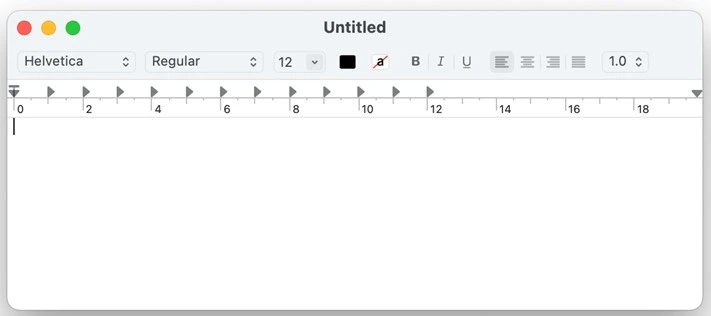
The text editors in the discussion are specifically designed for editing source codes. While some are standalone applications, some come integrated with software programs such as Integrated Development Environment (IDE).
For beginners, standalone text editors are great. IDE is best for those with coding experience since it comes with critical functionalities such as compiler and color differentiator. A text editor helps you form a mental workflow.
Before working on a text editor, learn its intrinsic features and customize it as per your needs.
12. Always Sandbox
Say that your code has bugs and is imperfect. Sandboxing will allow you to test the code in a separate system.
Hence, it will safeguard the infrastructure from any possible malfunction. The test in a separate system will help you understand how the code will work within the primary system.
In a way, Sandboxing gives you the freedom to play around with the code without worrying much about how well it will work within the main system.
Think of Sandboxing a code as a newbie player participating in a warm-up baseball match. The player will know where he stands by participating in the warm-up game.
Likewise, as a coder, Sandboxing will tell you how your code will fare if it gets introduced to the actual infrastructure.
Recent Posts



Top 10 Reasons Why Your Business Needs a Mobile App
April 10, 2025

Dominate Ecommerce with a Killer Video Marketing Strategy
March 15, 2025